 English
 русский
 عربى
 Español

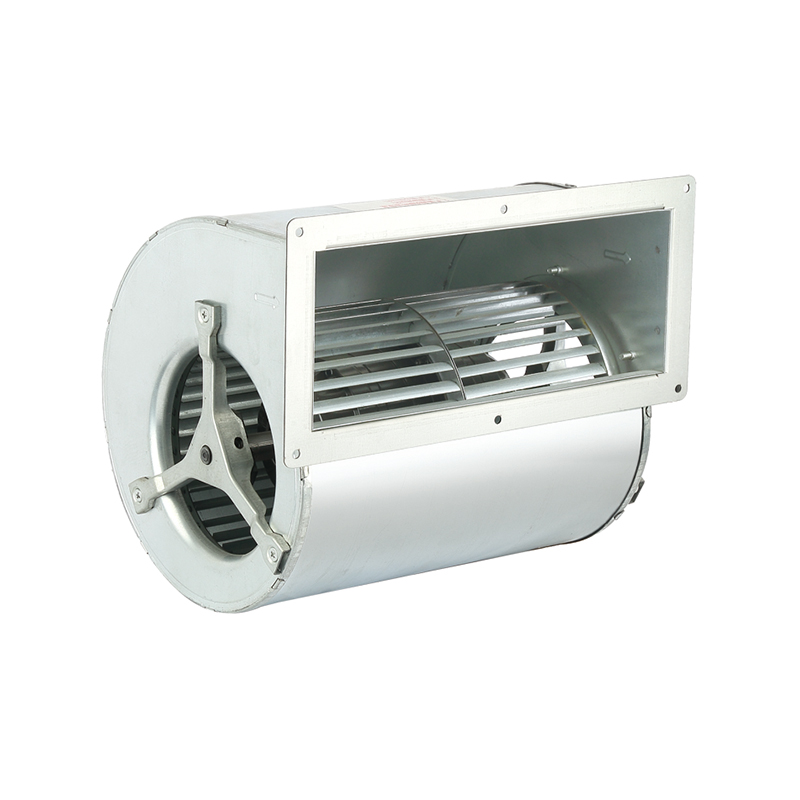
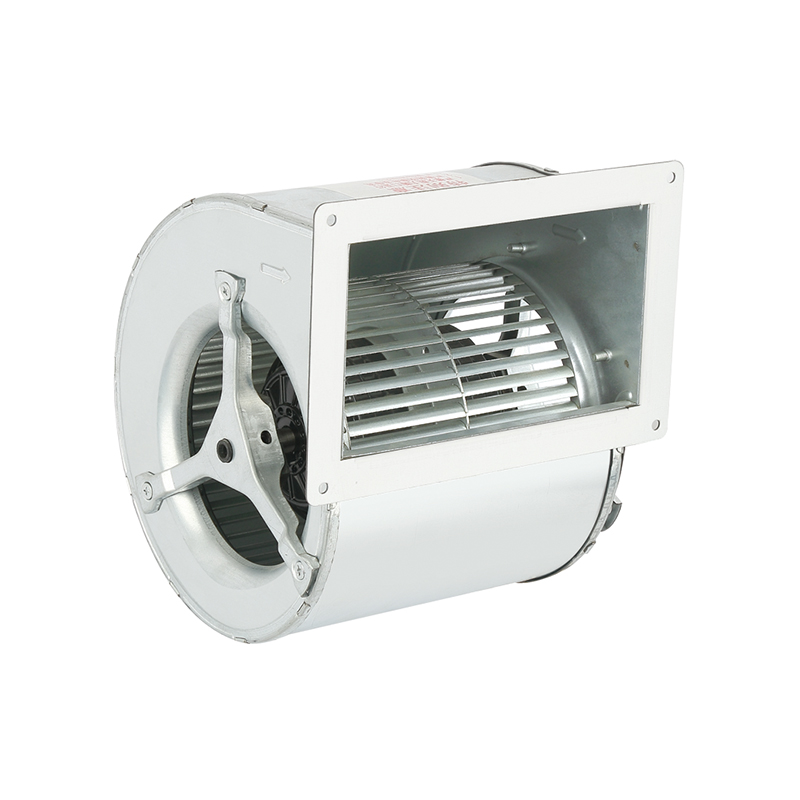
The motor supplies power. The impeller moves the air. The housing steers it, the inlet lets it in, and the outlet sends it on to the connected ductwork. A frame and a few accessories keep everything steady while the fan runs.
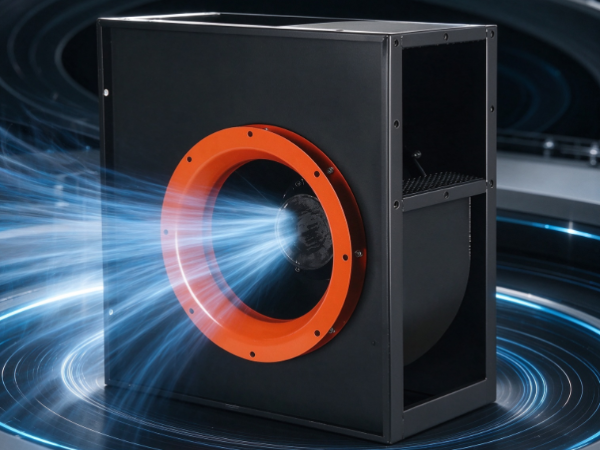
If you buy fans, maintain them, or design the systems they sit in, it pays to know what each part does. It also explains why one fan suits a dusty workshop and another suits a clean air-handling unit. Taking the components one at a time is the easiest way to see how the whole machine works.
What Is the Basic Structure of a Centrifugal Fan?
A centrifugal fan moves air with a rotating impeller. An axial fan pushes air along its shaft. A centrifugal fan pulls air into the middle of the impeller and throws it outward into the surrounding housing.
Most units are built from these parts:
- Impeller
- Fan housing
- Motor
- Air inlet
- Air outlet
- Shaft and bearing assembly
- Supporting frame
- Protective components
Together they form one mechanical system. The motor turns the impeller, and the housing decides where the air goes. The inlet and outlet give the air a clear way in and out.
Layouts change with the fan type and the job. Some fans are compact enough to fit inside a piece of equipment, and others are made for large ventilation systems. They look different, but each part does much the same work from model to model.
The internal arrangement also affects how the fan behaves in its surroundings. A fan feeding a long duct network may need a different setup from one mounted straight onto a ventilation opening.
What Role Does the Impeller Play in a Centrifugal Fan?
The impeller does the actual work of moving air. It takes mechanical energy from the motor and passes it to the air. Take it away and there is no airflow at all.
It has a central hub with blades set around it. Once the motor starts, the impeller spins. Air arrives at the center, meets the moving blades, and is pushed toward the rim.
This turns the airflow sideways. The air doesn't pass straight through the fan. It swings outward into the housing, which collects it and leads it to the discharge opening.
How Do Different Impeller Blade Designs Affect Fan Structure?
Blade layouts differ, and the shape and angle change how air travels through the fan. Designers pick one to match the conditions.
Common blade types include:
Forward-curved blades
These blades curve in the direction of rotation. The impeller usually carries many narrow blades packed closely together. You'll often see it in ventilation and air-handling equipment, where a compact build helps.
Backward-curved blades
These lean away from the direction of rotation. They suit many industrial ventilation systems because of how they behave under load.
Straight radial blades
Radial blades run straight out from the center. The shape is simple, which makes them a fit for some dusty or particle-laden air streams.
Which one to use depends on the air being handled, the system layout, and the operating conditions. A fan circulating clean air has different needs from one pulling industrial exhaust.
Balance matters too. The impeller turns constantly, so uneven weight causes vibration. Careful manufacturing and routine inspection keep it running smoothly.
How Does the Fan Housing Control Airflow?
The housing is the outer shell around the impeller. People also call it the casing or the scroll, after its curved profile. It catches the air leaving the impeller and guides it to the outlet.
Air flung off the impeller enters the gap between the blades and the housing wall. The curved passage channels it gradually toward the discharge opening.
It's more than a cover. Its shape and internal space affect how air flows through the fan. A poor housing design can add resistance, turbulence, or noise.
Many housings are spiral. The widening space around the impeller leads air toward one discharge direction, and the outlet can be placed in different positions to suit the installation.
The housing also holds the fan together. It encloses the impeller and carries the mounting points for other parts. In industrial settings it may face dust, moisture, heat, or chemicals, so the material should fit the real conditions.
Some housings are metal. Others use different materials for particular equipment needs. Where corrosion is a worry, surface treatment or a protective coating may be added.
Access is a practical point as well. Certain fans have removable panels or inspection openings, so technicians can check the impeller and clean off deposits without taking the whole unit apart.
What Are the Functions of the Motor and Shaft Assembly?
The motor provides the power that turns the impeller. If it fails, nothing else in the fan can do its job.
When electricity reaches the motor, it produces rotation. That rotation passes to the impeller through a drive arrangement. Depending on the design, the motor may connect directly to the impeller or drive it through a belt and pulleys.
Direct Drive Structure
In a direct drive fan, the impeller sits on the motor shaft. The two turn together, with no belt between them.
The result is compact, with fewer parts to wear. It's common where space is tight and the design allows a direct connection.
Belt Drive Structure
A belt drive uses pulleys and a belt to carry motion from the motor to the impeller shaft. That lets the motor sit apart from the impeller assembly.
You gain flexibility in layout and servicing. The cost is that belts need regular checks, since they can loosen, wear, or need replacing over years of use.
Why Are Shafts and Bearings Important?
The shaft links the drive to the impeller. It has to carry power and keep the impeller turning steadily, so the quality of its connection and its position both count.
Bearings hold the shaft in place and let it rotate smoothly with little friction.
They work under load and never really rest. Poor lubrication, contamination, or wear tends to show up as odd noise and vibration.
So the shaft and bearings belong to the core fan structure. They aren't add-ons. Their condition sets how stable the whole unit is and how much service it needs.
How Do the Air Inlet and Outlet Work Together?
The inlet and outlet are the fan's doorway for air. Where they sit depends on the impeller and housing design.
The inlet is normally near the center of the impeller. Surrounding air comes in here, and the spinning impeller carries it toward the outer edge.
It may connect straight to a duct, a collection hood, or another part of the system. Air should be able to enter without something in the way.
The outlet is usually on the side of the housing. It sends the collected air into an exhaust or supply duct.
Its direction can change with the fan design and the installation. Some systems need horizontal discharge, some need vertical, and some need another angle.
Both openings have to fit the rest of the ventilation layout. A poorly made connection can disrupt airflow and add resistance.
When arranging them, keep these points in mind:
- Connection size: The openings should match the connected ducts and system layout.
- Airflow direction: The inlet and outlet should support the intended movement of air.
- Installation space: Nearby walls, equipment, and structures should not block the openings.
- Connection quality: Loose or poorly sealed joints may cause air leakage.
- Maintenance access: The arrangement should allow inspection and cleaning when needed.
A well-planned link between fan and duct lets the equipment work the way it was meant to.
What Supporting Components Are Found in a Centrifugal Fan?
Beyond the air-moving and power parts, a fan carries supports and guards. They get less attention, yet they affect how stable the installation is, how safe it is to be near, and how easy it is to service.
Supporting Frame
The frame holds the fan where it belongs. It might be a base, brackets, mounting plates, or a mix of structural pieces.
A rigid frame keeps the motor, impeller, and housing lined up. A weak or badly installed one lets vibration grow.
It also has to suit the location. Floor, wall, roof, and equipment-platform mounting each call for a different support setup.
Protective Guard
Guards keep hands and objects away from moving parts. They go around exposed rotating components, belt drives, and similar areas.
A good guard doesn't choke the airflow or block the access that maintenance needs. It also stays firmly fixed while the fan runs.
Vibration Isolation Components
Some fans sit on rubber pads or similar mounts between the unit and its support surface.
These cut the amount of vibration passed into nearby structures. That helps in buildings where equipment noise and movement need to be kept down.
Inspection and Drainage Features
Depending on the environment, a fan may have inspection openings, access panels, or drainage points.
Inspection openings let technicians see inside. Drainage helps where moisture can collect in the housing.
These extras are chosen to match the application. They don't appear in the same form on every fan.
How Does the Overall Structure Affect Centrifugal Fan Applications?
A fan's structure decides how it can be installed and what ventilation work it can handle. Models share the same operating principle, but their parts are arranged differently for different settings.
Industrial Exhaust Systems
Industrial exhaust systems often have to clear warm air, dust, odors, and fumes from production areas. Centrifugal fans connect to collection hoods and ducts and carry the unwanted air to a discharge point.
The impeller and housing need to suit the air. Dusty air may call for a design that's easy to clean, and corrosive conditions call for suitable material protection.
Commercial Kitchen Ventilation
Commercial kitchens produce heat, smoke, grease particles, and cooking odors. Centrifugal fans are a common choice in exhaust systems linked to kitchen hoods and ducts.
The fan has to cope with what's in that air. Grease collects in ducts and housings, so cleaning access and routine inspection belong in the plan from the start.
Air Conditioning and Air Handling Systems
These fans also work inside air-handling units, where they push air through filters, cooling coils, heating sections, and distribution ducts.
The housing and outlet send air on to the next stage. The motor and impeller assembly also has to fit the equipment layout.
Dust Collection Systems
Dust collectors use airflow to carry particles to a collector or separator. A centrifugal fan can supply the airflow that moves air through the connected system.
Here the internal structure should be weighed against the dust itself. Particle size, moisture, and the chance of material building up all affect component choice and maintenance planning.
Equipment Cooling and Ventilation
Industrial machines give off heat while they run. Centrifugal fans can be built into cooling and ventilation setups that carry warm air away from equipment areas.
Inlet position, outlet direction, and installation should match the equipment layout. That keeps nearby structures from blocking the airflow.
What Should Be Checked When Inspecting a Centrifugal Fan Structure?
Knowing the structure makes inspection easier. Every part has a job, so a visible change or an odd operating sign often points to the part that needs attention.
Check the impeller for dust buildup, corrosion, deformation, or damage. Deposits on the blades upset balance and airflow. Clean it as the manufacturer advises, so the blade surfaces aren't harmed.
Look over the housing for cracks, corrosion, loose fasteners, and air leaks. Its inner surfaces may need cleaning if dust or other material has built up.
The motor and drive need regular attention. Unusual heat, noise, or vibration can mean a mechanical or electrical fault. On belt-driven fans, check belt condition and tension. On direct drive units, look for misalignment or connection problems.
Bearings deserve a look too, since they carry the shaft through every rotation. A change in noise or vibration can signal wear or a lubrication problem. Follow the manufacturer's instructions for upkeep.
Don't skip the inlet, outlet, and frame. Blocked openings restrict airflow, and loose mounts hurt mechanical stability.
A practical structural inspection can cover these areas:
| Component | Inspection Focus |
|---|---|
| Impeller | Blade condition, dust buildup, and balance |
| Housing | Corrosion, cracks, and internal deposits |
| Motor | Operating noise, heating, and electrical connections |
| Shaft and Bearings | Rotation, alignment, lubrication, and wear |
| Inlet and Outlet | Blockages, connection quality, and air leakage |
| Supporting Frame | Stability, fasteners, and vibration |
| Protective Guard | Secure installation and component coverage |
How closely to inspect depends on the working environment and how often the fan runs. Equipment handling dusty, humid, or corrosive air needs a harder look at internal surfaces and moving parts.
When you understand each structural part, you can trace an operating problem to its source and plan maintenance sensibly. It also ties fan design back to what industrial ventilation systems really require.