 English
 русский
 عربى
 Español

That's why testing matters in fan manufacturing. Before delivery or installation, manufacturers check the fan's physical condition, operating behavior, airflow, noise and other traits. These checks catch problems early and show whether the fan suits its intended use.
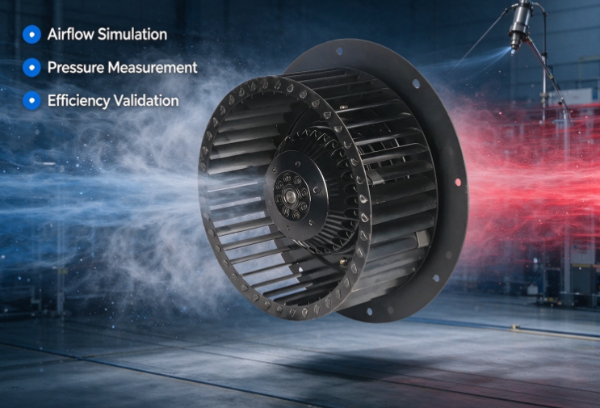
A proper test procedure goes well beyond switching on the motor to see if the impeller turns. It usually runs through several stages, each looking at a different side of the product, from outer construction to performance under load.
Knowing what these stages involve helps manufacturers organize quality control. It also helps buyers judge industrial ventilation equipment more carefully.
Why Is a Testing Procedure Important for Centrifugal Fans?
A centrifugal fan pulls air into the center of an impeller and pushes it outward by centrifugal force. The air then passes through the housing and into the connected ventilation system.
The principle is simple, but real performance depends on many parts working together. The motor, impeller, housing, shaft, bearings and electrical system all play a role.
One faulty component can affect the whole unit. A badly installed impeller may cause vibration. Poor housing assembly can disrupt airflow. An electrical fault can stop the fan altogether.
Testing lets manufacturers examine these risks before the fan reaches the customer.
A structured procedure serves several purposes:
- Product condition inspection: Checks for visible damage, loose parts or assembly faults.
- Operating performance evaluation: Looks at how the fan behaves when running under defined conditions.
- Airflow assessment: Shows whether the fan can deliver the air movement required.
- Noise and vibration checks: Spots unusual behavior that could affect the working environment.
- Electrical safety inspection: Reviews the motor and related connections.
- Quality documentation: Creates inspection records that support product acceptance and quality management.
Testing also exposes recurring production problems. If similar faults appear across several units, the manufacturing or assembly process may need adjusting.
Buyers benefit too. Understanding these checks makes it easier to talk requirements with suppliers, and to tell a fan that was merely powered on from one that was fully evaluated.
What Is Checked During the Initial Visual and Structural Inspection?
Before the fan runs, its outer condition and assembly should be examined. This step finds visible problems without starting the equipment.
The housing comes first. It guides airflow and protects internal parts, so inspectors look for proper assembly and signs of damage, deformation, corrosion or poor finishing.
The impeller needs attention as well. It spins during operation, so its condition affects airflow and mechanical stability. Inspectors may check the blades, connections and surface for damage or assembly irregularities.
Other components are reviewed in the same pass.
Motor and mounting structure
The motor should sit securely on its support. Inspectors may check the mounting, fastening points and the visible condition of the motor housing.
Shaft and bearing connections
The shaft and bearings should be assembled correctly. Visible misalignment, looseness or damage may call for further investigation.
Fasteners and protective covers
Bolts, screws, guards and other protective parts should be confirmed as properly installed.
Air inlet and outlet
Both should be free of visible obstructions, since restricted airflow affects operation.
Surface treatment
Coatings and protective finishes are checked for obvious defects that could hurt durability or appearance.
This stage may seem basic, but it says a lot about manufacturing quality. It can also save time, because a visible assembly fault means there's no need to run an operating test yet.
How Is the Mechanical Operation of a Centrifugal Fan Tested?
After the initial inspection, the fan may go through mechanical operation checks. These confirm that rotating parts move smoothly and that the assembled unit behaves normally while running.
The impeller is the heart of the fan, since its rotation creates the airflow. If it's unbalanced or poorly installed, the result can be vibration, noise or extra stress on connected parts.
Mechanical inspection covers several areas.
Impeller rotation
The impeller should turn without obvious obstruction. Where the design allows, inspectors may spin it by hand before powering up.
Rotational direction
Direction should match the manufacturer's design. Wrong rotation can cut the airflow the fan delivers.
Bearing condition
Bearings support the rotating assembly. Unusual sounds, excess play or signs of friction may point to a problem.
Mechanical vibration
Vibration is a key indicator. Unusual levels can come from an unbalanced impeller, loose mounting, misalignment or other mechanical issues.
Connection stability
The motor, housing and supporting structure should stay firmly connected while running. Loose connections hurt stability and can add noise.
A mechanical test shouldn't stop at whether the fan starts. It should also show whether the fan keeps running smoothly afterward.
If something odd appears, the manufacturer may need to halt the test and find the cause before going further.
What Electrical Tests Are Included in a Centrifugal Fan Inspection?
The electrical system is another core part of testing. The motor supplies the power that turns the impeller, so electrical faults can affect both operation and safety.
Inspections usually begin with the motor and its connections. Inspectors check that wiring is laid out correctly, terminals are tight and protective components are in place.
Exact requirements depend on the motor design, electrical configuration and intended application.
Common inspection areas include:
Wiring and terminal connections
Connections should follow the approved design. Loose terminals, damaged wires and wrong connections can all cause operating trouble.
Motor starting behavior
The motor should start in a controlled way. Inspectors watch for a smooth start and listen for odd sounds or signs of electrical instability.
Current and voltage conditions
Electrical measurements show whether the motor runs under suitable supply conditions. Abnormal readings may point to problems with the supply, wiring or motor.
Insulation condition
Insulation checks assess whether electrical parts are protected against unwanted current leakage. Test methods should match the motor and the applicable safety requirements.
Protective devices
Overload protection and other safety arrangements should be reviewed to confirm they suit the equipment.
Electrical testing matters even more for industrial fans, which may run for long periods in demanding settings. A fault missed during manufacturing can cause trouble after installation.
Qualified personnel should carry out the inspection using suitable procedures and equipment.
How Do Manufacturers Test Airflow and Pressure Performance?
Airflow and pressure are central to how a centrifugal fan performs. A fan can start normally and look mechanically sound yet still fail to deliver the air the system needs.
That makes performance testing an essential part of inspection.
Airflow depends on impeller design, rotational speed, housing structure and operating conditions. The connected ductwork and system resistance also change how the fan performs in practice.
Manufacturers may evaluate airflow and pressure under controlled conditions.
Airflow measurement
This shows how much air the fan moves under the chosen test conditions, and whether it suits the intended ventilation needs.
Pressure measurement
A centrifugal fan has to overcome resistance in the system. Pressure testing assesses how well it moves air through ducts, filters and other equipment.
Operating condition evaluation
Testing at different operating points shows how performance shifts. This helps manufacturers confirm the fan behaves as expected across its working range.
Performance curve review
Results can be used to build or verify a performance curve. The curve shows the relationship between airflow and pressure and helps buyers understand the fan's characteristics.
Airflow and pressure are linked. A change in system resistance changes how much air the fan delivers.
A fan connected to a system with restrictive filters, for example, will behave differently from the same fan on a less resistant system. That's why test conditions need to be clearly defined.
Performance testing also keeps buyers from choosing a fan by looks or size alone. Actual operating requirements should drive the choice.
Should Noise and Vibration Be Included in Centrifugal Fan Testing?
Noise and vibration shape the day-to-day experience of running a fan. They may not decide whether the fan can move air, but they affect comfort, reliability and maintenance.
Industrial fans often sit in factories, workshops, commercial buildings and ventilation rooms. Excess noise makes a workplace unpleasant, and unusual vibration can signal a mechanical fault.
Noise testing measures the sound the fan makes in operation. Sources include airflow, the motor, bearing friction and contact between mechanical parts.
Several factors influence noise level:
- Impeller shape and blade arrangement.
- Motor operating condition.
- Housing structure.
- Airflow turbulence.
- Installation and support conditions.
- Loose or poorly secured components.
The test environment counts too. Nearby equipment, room acoustics and background noise can skew results, so manufacturers should use suitable test conditions.
Vibration testing gives another view of mechanical health. Excess vibration can come from an unbalanced impeller, loose fasteners, misalignment or bearing trouble.
These causes deserve investigation, because long-term vibration stresses the fan structure and connected parts.
Both checks matter most for fans meant to run continuously or sit near occupied spaces.
They can also reveal assembly faults that a visual inspection would miss.
How Is a Centrifugal Fan Tested Under Actual Operating Conditions?
Factory testing gives valuable data, but a fan may perform differently once installed. The working environment affects airflow, pressure, noise and overall operation.
In a real system, the fan works alongside ducts, filters, dampers and other equipment. These add resistance and shift the fan's operating point.
So some procedures include an evaluation under conditions that represent the intended application.
At this stage, manufacturers or installation teams may consider several factors.
System compatibility
The fan should suit the connected ventilation system. Its airflow and pressure characteristics must match what the system needs.
Installation arrangement
Fan position, airflow direction, mounting structure and duct connections all affect operation.
Air inlet and outlet conditions
Poorly arranged duct connections can disturb airflow. Inspectors may check whether the installation lets air enter and leave the fan as intended.
Continuous operation
Some applications need fans to run for long stretches. Running checks can reveal unusual changes in sound, vibration or motor behavior.
Environmental conditions
Temperature, humidity, dust and other factors can affect operation. The equipment should suit the conditions it will face.
Factory and on-site testing serve related but different purposes. Factory testing examines the product under controlled conditions. On-site testing shows how it works as part of the installed system.
Both are useful when an application calls for detailed performance assessment.
What Documentation Should Be Prepared After Centrifugal Fan Testing?
Testing doesn't end when the fan stops. Results should be recorded so manufacturers, buyers and installers can understand the product's condition and test history.
Clear records support quality control and give a reference if a problem appears later.
A fan test report may include the following.
| Documentation Item | Main Information |
|---|---|
| Product Identification | Fan model, product type, and identification details |
| Visual Inspection Record | Housing condition, assembly, and external appearance |
| Mechanical Inspection | Impeller, bearings, mounting, and operating condition |
| Electrical Test Record | Motor connections and electrical inspection results |
| Performance Test Results | Airflow, pressure, and related operating information |
| Noise and Vibration Record | Observations and measurements from relevant tests |
| Final Inspection | Overall product condition and inspection status |
Documentation should reflect the tests actually performed. Manufacturers shouldn't describe inspections that weren't completed, or present results without explaining the conditions behind them.
It also helps to keep a record of any adjustments or repairs made during testing. These details support traceability and let manufacturers review recurring quality issues.
For buyers, a test report is a practical way to see what was checked before delivery. It also supports product acceptance and communication between suppliers and project teams.
The required scope varies with fan design, intended use, customer specifications and applicable industry standards. A small ventilation fan won't need the same inspection setup as a large industrial unit.
Manufacturers should build testing procedures around the actual product and its operating environment, and make sure qualified personnel carry out each stage.