 English
 русский
 عربى
عربى Español
Qinlang focuses on providing high-quality products and considerate services, and is committed to meeting every expectation of our customers.
The DKT-133 Cooling Ventilation Double Inlet Air Conditioning Fan is d...
See Details
In real systems, airflow rarely behaves in a neat and uniform way. The same fan can feel different once it is placed into a specific space, connected to a duct, or exposed to different resistance around it. That is why performance often looks simple on paper, yet changes once the fan starts working in an actual setting.
An AC Axial Flow Fan moves air along the same direction as its rotating shaft. The working idea is direct, but the result depends on more than rotation alone. Air intake, outlet space, nearby obstacles, and the shape of the surrounding structure all leave their mark on how the air travels.
For manufacturers, buyers, and system designers, these details matter. A fan is never working in isolation. It is part of a larger airflow path, and the path around it can change the final result in a very real way.
An AC Axial Flow Fan is built to move air in a straight line through the fan body. Air enters from one side and exits from the other, which makes it useful in places where steady air exchange is needed rather than strong pressure build-up.
In industrial use, that straight movement is only part of the picture. Once the fan is placed into a cabinet, wall opening, machine housing, or ventilation path, the surrounding space starts to influence the airflow. Some layouts let the air pass smoothly. Others make the flow shift, slow down, or spread unevenly.
A few points stand out in practice:
So while the basic movement is simple, the real result often depends on how well the fan matches the system around it.
The airflow starts when the blades rotate and create a pressure difference between the front and rear sides of the fan. That difference pulls air forward and pushes it through the system.
Still, the air does not always behave in the same way from one setup to another. A fan that works smoothly in an open space may act differently when placed inside a restricted enclosure. The reason is that airflow is shaped by several small details working together.
These details often include:
When these parts fit together well, the flow tends to stay more even. When one part is out of balance, the air may become less stable, and that change is usually easy to notice in real use.
The key point is that airflow behavior is not fixed. It responds to the environment around it, sometimes in subtle ways and sometimes in a way that is hard to ignore.
Blade design has a direct influence on how air moves through the fan. It affects how the air is guided, how smoothly it passes through, and whether the flow stays even from intake to discharge.
In an AC Axial Flow Fan, the blade shape is not just about appearance. A small change in curvature or spacing can shift the way the air behaves. Some blade structures help the air pass more calmly, while others may create more disturbance if the system is not matched well.
| Blade feature | What it can affect |
|---|---|
| Curved shape | How the air is guided |
| Blade spacing | How evenly air moves through the fan |
| Edge condition | How smoothly the air passes |
| Surface condition | How much resistance the airflow feels |
These details may seem small, but they matter more than people often expect. In real applications, stable air movement usually depends on a blade design that suits the surrounding system, not just the fan body by itself.
The same fan can behave differently depending on where and how it is installed. A tight space, a narrow opening, a bent airflow path, or even a nearby obstruction can all quietly change the way air moves through the system.
In a more open layout, air tends to pass through with less resistance, and the flow feels more direct. In contrast, when the space is confined or the pathway is interrupted, the air has to adjust its direction and speed more frequently, which can make the movement less smooth. Over time, this difference does not only affect how the airflow feels, but also how consistently the system operates.
Things like the distance between surfaces, the position of inlet and outlet openings, and the presence of bends or partial blockages all contribute to the final behavior of the airflow. These factors do not act alone; they combine and influence each other once the system starts running.
Because of this, installation is not just a mechanical step. For an AC Axial Flow Fan, the surrounding environment becomes part of the airflow path itself. Even if the fan remains unchanged, the overall performance can shift depending on how the space is arranged around it.
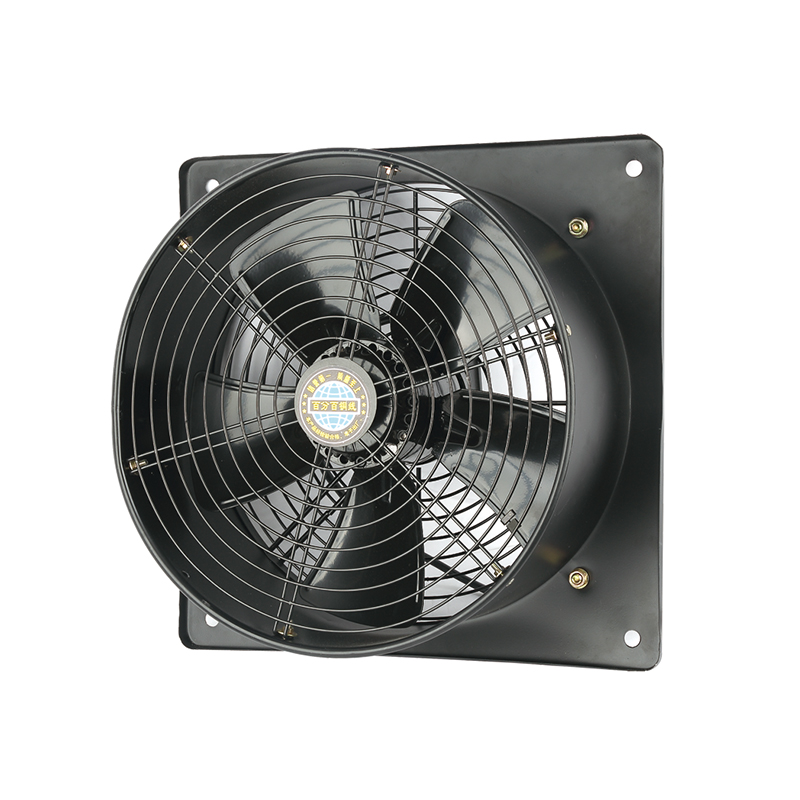
Noise is rarely stable in real use. It shifts with airflow conditions, sometimes in a subtle way, sometimes more obvious. A tighter duct or a partially blocked outlet is usually enough to change the sound pattern.
With an AC Axial Flow Fan, airflow behavior and noise tend to move together. When the flow is smooth, the sound stays even. Once the airflow starts breaking up a bit, the tone changes as well. It does not always mean something is wrong, just that the air is no longer moving in a clean path.
Installation plays a role too. In compact spaces or near reflective surfaces, the sound can feel slightly amplified or uneven. In open layouts, it tends to feel more relaxed, less concentrated.
A performance curve is often treated like a reference sheet, but in practice it behaves more like a guide than a fixed map.
Most of the time, system resistance is not perfectly known in advance. So the curve is used to estimate where the working point might fall, not to define it precisely. In real setups, that point can shift slightly depending on duct layout or installation choices.
Some areas on the curve react more noticeably to change. A small adjustment in system conditions can move the operating behavior more than expected in those regions.
| Region on curve | What is often observed in use |
|---|---|
| Lower resistance area | Air moves without much restriction |
| Middle area | More typical operating condition |
| Higher resistance area | Airflow starts to feel limited |
| Steeper transition zones | Small changes have stronger effect |
In real projects, it is rarely about exact matching. It is more about understanding how sensitive the system might be.
Blade design does not always show its effect immediately. It becomes more noticeable once conditions are less ideal or when the installation is not very open.
Small differences in blade shape or spacing can slightly change how air passes through the fan. Sometimes the airflow feels smoother, sometimes it feels a bit less consistent near the edges.
In tighter installations, these differences tend to stand out more. Air has less room to recover, so any disturbance is easier to notice.
| Blade aspect | What it tends to influence |
|---|---|
| Curved profile | How directly air is guided |
| Spacing layout | How evenly air spreads |
| Edge condition | Smoothness of airflow transition |
| Surface feel | Resistance during passage |
These factors rarely act alone. The final airflow behavior is usually a mix rather than a single cause.
Voltage changes usually do not create sudden effects, but the influence becomes clearer over continuous operation.
When speed shifts slightly, airflow responds in the same direction. The relationship is fairly direct, though not always immediately noticeable in small variations.
In environments where power conditions are not fully steady, the effect becomes more visible. The fan does not behave erratically, but the airflow may feel less uniform over time.
Typical observations in practice:
It is not usually a failure condition, more a gradual change in how stable the system feels during operation.
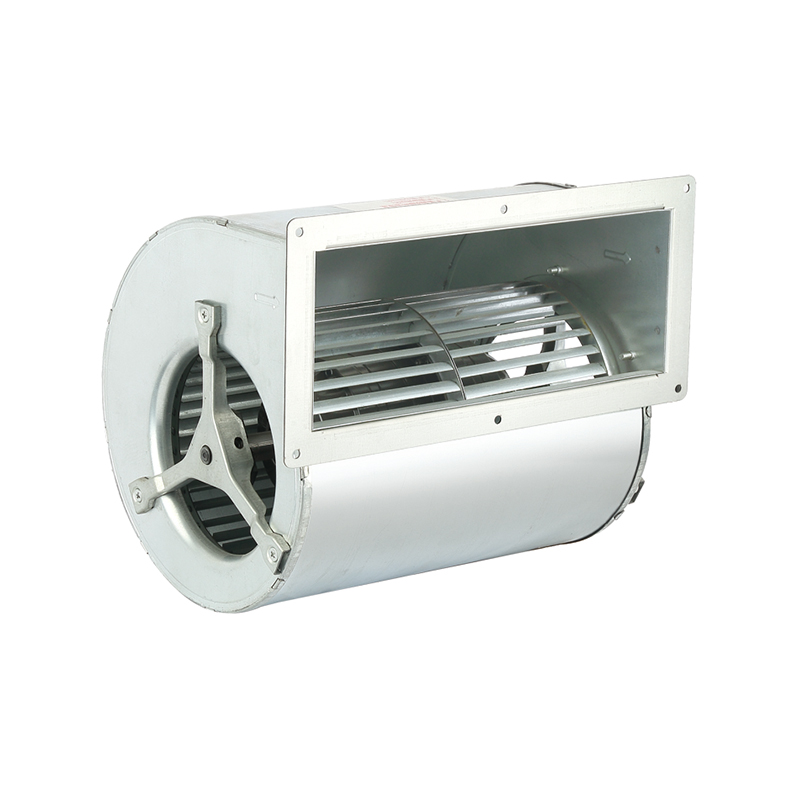
The DKT-133 Cooling Ventilation Double Inlet Air Conditioning Fan is d...
See Details
The DKT-146 Multi-Function Variable Frequency Double Inlet Air Conditi...
See Details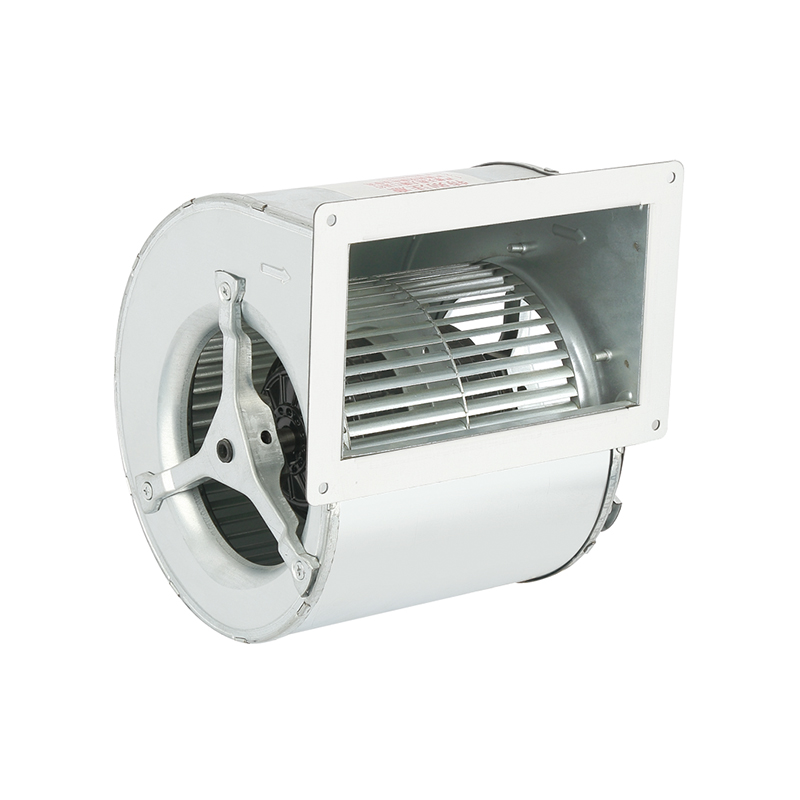
The DKT-160 Heat Dissipation Exhaust Double Inlet Air Conditioning Fan...
See Details
The DKT-180 Tilt Back Cool Down Double Inlet Air Conditioning Fan, a s...
See Details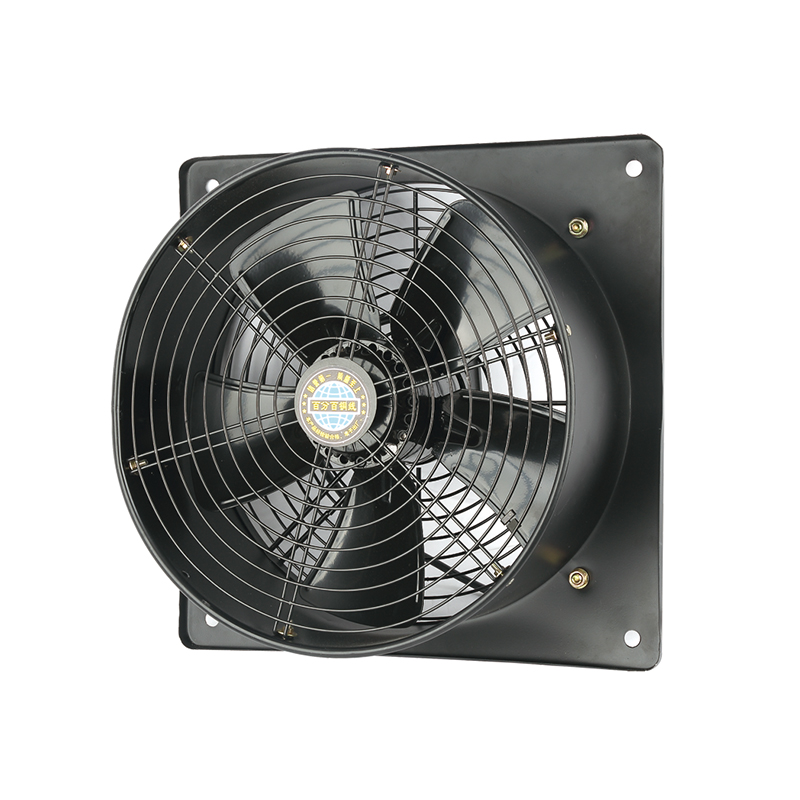
The YWF-400-2D2E Efficient Square form Axial fan is designed with a fo...
See Details
The YWF-350-2D2E Low noise Square form Axial Fan is designed with a co...
See Details
The YWF-350-4D4E Low vibration Square form Axial Fan is a outstanding ...
See Details
The YWF-400-4D4E Durable Square form Axial Fan is designed with advanc...
See Details
Qinlang focuses on providing high-quality products and considerate services, and is committed to meeting every expectation of our customers.
© Zhejiang Qinlang Electromechanical Co., Ltd.
Fans And Air-Cooling Equipment Factory
