 English
 русский
 عربى
عربى Español
Qinlang focuses on providing high-quality products and considerate services, and is committed to meeting every expectation of our customers.
The DKT-133 Cooling Ventilation Double Inlet Air Conditioning Fan is d...
See Details
Square axial fans are commonly used in equipment cooling systems across different industrial environments. They show up in electrical cabinets, control panels, machinery enclosures, communication equipment, and many other systems where heat builds up during operation.
At first glance, this type of fan does not look complicated. It is basically a fan mounted inside a square frame. But in real applications, this simple structure actually plays an important role in how air moves inside equipment and how heat is managed over time.
Cooling inside equipment is not only about moving air. It is more about keeping internal conditions stable enough so that components can continue working without being affected by heat accumulation. This is where square axial fans are often selected, not because they are complex, but because they fit real installation conditions in a practical way.
Heat is a normal part of operation
In almost every type of electrical or mechanical equipment, heat is generated during use. This is not an exception, but a normal working condition.
Heat usually comes from:
If this heat stays inside the system for too long, it starts to build up in certain areas. That is why airflow is introduced.
Air movement is a simple but important solution
Among different cooling methods, air movement is one of the most widely used. It does not require complex structure and can be adapted to many types of equipment design.
Square axial fans are used as part of this airflow solution. Their job is not to solve everything alone, but to support a continuous movement of air through the system.
Real equipment design is usually rectangular
Most equipment housings are not round. They are usually designed with flat panels, straight edges, and rectangular openings.
Because of this, a square fan naturally fits into these structures without requiring special modification.
This makes installation easier in practice, especially when:
Airflow direction becomes easier to control
Axial fans move air in a straight line. When placed inside a square frame, the airflow path becomes more predictable inside equipment systems.
This helps engineers and installers guide air in a clearer direction, for example:
In real systems, this directional flow is more useful than random circulation.
Better fit in compact layouts
Many modern equipment designs are compact. Space inside the housing is often already occupied by components, wiring, or modules.
Square axial fans help because they use space efficiently. There is less wasted area around the installation frame, which is important when layout space is limited.
Airflow goes directly to heat source areas
In equipment cooling, the goal is usually very direct: remove heat from where it is generated.
Square axial fans help by creating a straight airflow path. This airflow can pass through or across heat-sensitive areas and push warm air out of the system.
In practice, this means:
Works well in long operation cycles
Many industrial systems do not run for short periods. They often operate for long hours or even continuously.
Square axial fans are commonly used in these situations because they can maintain airflow for extended periods without changing system structure.
They are often selected in designs where stability matters more than complexity.
Simple system integration
One reason engineers prefer this type of fan is that it does not require complicated supporting systems.
In many cases, the cooling setup only needs:
This simplicity helps reduce design complexity inside equipment.
Heat does not spread evenly
Inside an enclosed space, heat does not distribute evenly. It tends to accumulate near components that generate more energy.
If there is no airflow, these areas slowly become warmer than others.
Air exchange keeps temperature balanced
A square axial fan helps create a continuous air exchange process:
This cycle repeats during operation, helping reduce heat concentration.
Importance of airflow direction planning
In real installations, airflow direction is not something that can be ignored. If air enters and exits without a clear path, circulation becomes less effective.
That is why fan placement is often planned together with equipment layout, not added at the end.
Placement affects cooling behavior
Where the fan is installed inside or outside the equipment affects how air moves through the system.
For example:
Each position creates a different airflow pattern.
Space around the fan is often underestimated
In real projects, one common issue is placing the fan too close to obstacles.
When airflow is blocked too early:
This is why surrounding space is part of cooling design, not just fan selection.
Cooling systems are part of long-term operation
Square axial fans are usually not installed for short-term use. They are part of systems that run regularly over long periods.
Because of this, maintenance planning is important.
Easy access makes a difference
In many equipment designs, engineers try to position fans where they can be checked without removing major components.
This helps with:
Small changes matter over time
In real environments, dust, airflow resistance, and usage conditions can gradually affect performance.
Regular simple checks help keep the system stable without major maintenance work.
Simple Comparison View
| Aspect | Square Axial Fan Behavior in Cooling |
|---|---|
| Airflow direction | Straight and predictable |
| Installation style | Fits panel-based structures |
| Space usage | Works in compact designs |
| Cooling method | Continuous air movement |
| System complexity | Low structural complexity |
| Maintenance access | Usually manageable |
| Application range | Widely used in equipment cooling |
Thinking airflow alone solves all heating problems
Airflow is important, but cooling performance also depends on:
Assuming all fans behave the same
Even if two fans look similar, airflow behavior inside equipment can be different depending on structure and installation.
Ignoring installation environment
Dust, humidity, and surrounding space can all influence cooling performance over time. These factors are often more important than expected.
In real engineering work, selecting a square axial fan is usually not just about the fan itself. It is about the system it will support.
A simple practical checklist often includes:
This kind of thinking helps reduce problems after installation.
Square axial fans are widely used in equipment cooling because they match real engineering conditions. They are not complicated devices, but they fit well into structured equipment layouts and support stable airflow movement.
In many systems, cooling is not about adding complex solutions. It is about making airflow predictable and consistent inside a limited space.
When installed with proper planning, square axial fans help maintain more stable internal conditions and support continuous operation of equipment over time.
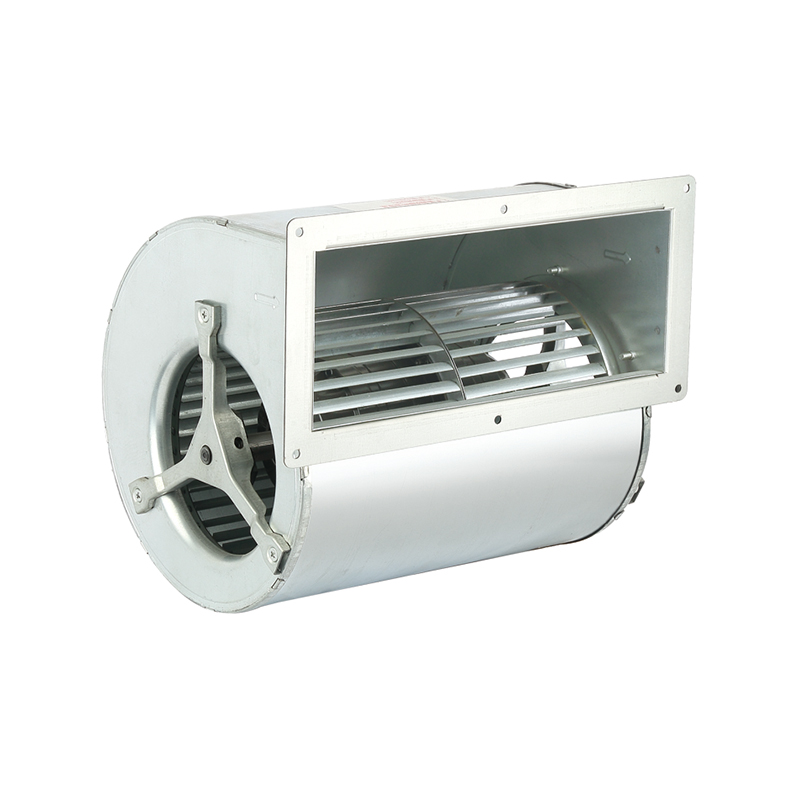
The DKT-133 Cooling Ventilation Double Inlet Air Conditioning Fan is d...
See Details
The DKT-146 Multi-Function Variable Frequency Double Inlet Air Conditi...
See Details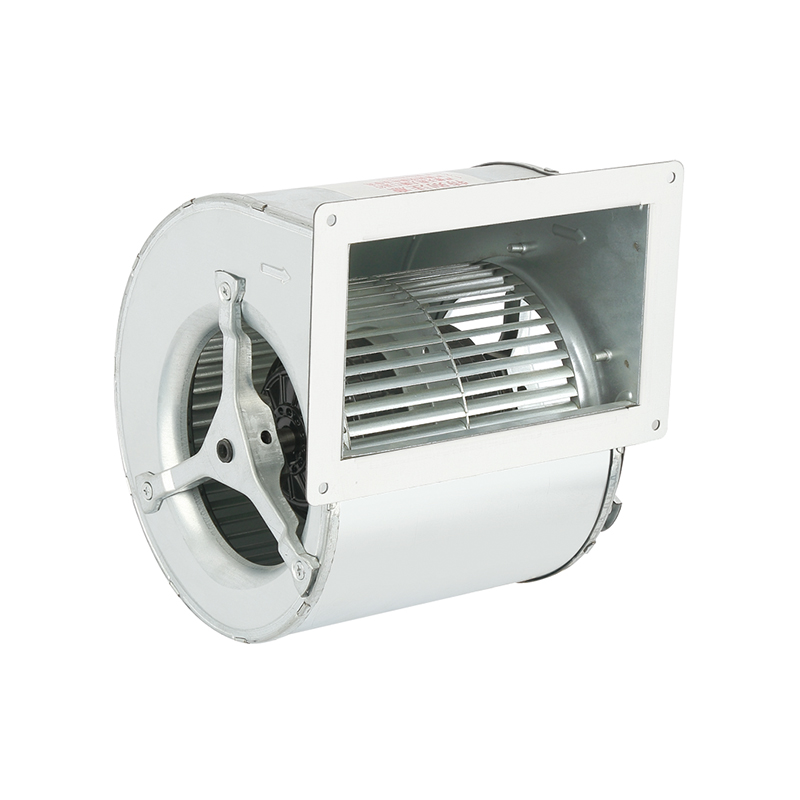
The DKT-160 Heat Dissipation Exhaust Double Inlet Air Conditioning Fan...
See Details
The DKT-180 Tilt Back Cool Down Double Inlet Air Conditioning Fan, a s...
See Details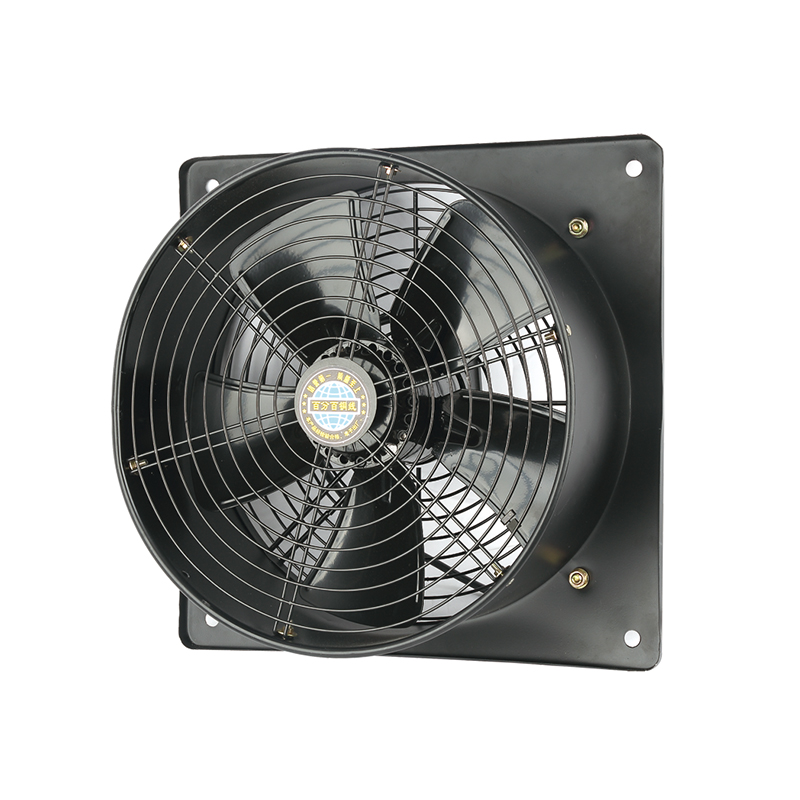
The YWF-400-2D2E Efficient Square form Axial fan is designed with a fo...
See Details
The YWF-350-2D2E Low noise Square form Axial Fan is designed with a co...
See Details
The YWF-350-4D4E Low vibration Square form Axial Fan is a outstanding ...
See Details
The YWF-400-4D4E Durable Square form Axial Fan is designed with advanc...
See Details
Qinlang focuses on providing high-quality products and considerate services, and is committed to meeting every expectation of our customers.
© Zhejiang Qinlang Electromechanical Co., Ltd.
Fans And Air-Cooling Equipment Factory
