 English
 русский
 عربى
عربى Español
Qinlang focuses on providing high-quality products and considerate services, and is committed to meeting every expectation of our customers.
The DKT-133 Cooling Ventilation Double Inlet Air Conditioning Fan is d...
See Details
People spend the bulk of their time indoors, and the air filling those homes, offices, and enclosed spaces shapes how they feel and function far more directly than most people stop to consider. Air quality isn't some distant technical metric — it's something occupants experience firsthand, every single day.
A handful of factors drive what that air actually contains. Moisture levels shift comfort and can quietly encourage growth nobody wants. Gases from cooking, cleaning products, and building materials themselves accumulate steadily over time. Particles drift in too — dust, skin cells, whatever's tracked in from outside. Without proper ventilation working against all of this, contaminants build up until occupants start noticing something's off.
Stale air has a distinct feel to it — heavy, lifeless, stuffy in a way that's hard to ignore. Occupants often end up drowsy or just generally uncomfortable without quite knowing why, and that's really because the air has been slowly depleted of fresh oxygen while filling up with whatever the people and activities in that space keep producing. The body notices, responding with reduced alertness whether anyone's consciously aware of the cause or not.
Ventilation is what actually breaks that cycle — pulling stale air out while drawing fresh air in. That exchange only works as well as the equipment driving it, though, and when it's functioning properly, the difference in how a space feels shows up almost immediately.
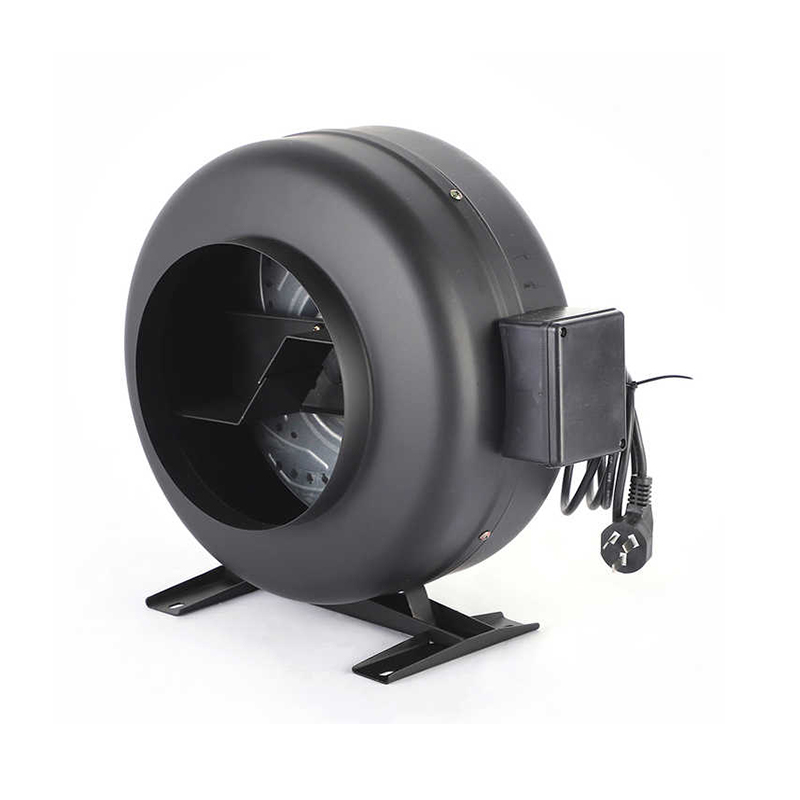
Air travels through ductwork because of pressure differences, plain and simple. A fan is what creates those differences — drawing air in through the intake, pushing it back out through the discharge — and that pressure gradient is what drives airflow from high‑pressure zones toward low‑pressure ones across the whole duct system.
The fan really sits at the center of everything here. Its performance more or less dictates how much air actually makes it through the ducts: a fan that moves air well supports the entire ventilation process, while one that struggles against resistance simply moves less air, leaving the space under‑ventilated no matter how good the rest of the design looks on paper.
Airflow ultimately comes down to a relationship — how much pressure the fan can generate versus how much resistance the duct system throws back at it. Every elbow, every transition, every extra length of duct adds a little more resistance, and the fan needs enough pressure capability to push through all of that while still delivering the air volume the space actually needs.
When airflow falls short, the signs tend to show up together rather than one at a time — stale air lingering longer than it should, moisture creeping up, uneven temperatures developing across the space. None of it feels quite right, and much of that traces straight back to whether the fan can genuinely overcome the resistance built into its system.
Efficiency, at its core, measures how much air movement a fan delivers for a given amount of energy going in. A High Efficiency Duct Fan simply moves more air per unit of electricity than a standard design manages — and that gap widens considerably once you factor in a fan running for extended periods rather than just occasionally.
That relationship between energy input and airflow output is really what drives operating costs over time. A fan wasting energy through poor design or a mismatched selection ends up costing more to run, and that wasted energy doesn't just disappear — it shows up as heat, noise, and vibration instead of useful airflow doing its job.
Efficient fans cut energy consumption while still moving the same volume of air, and those savings compound steadily across the equipment's whole service life. For systems running continuously, the gap between an efficient fan and a standard one can end up representing a genuinely meaningful slice of a facility's overall energy budget.
The benefits don't stop at the electricity meter, either. A fan running efficiently generates less heat, which eases cooling loads in mechanical rooms nearby, and it tends to run quieter too — quiet enough to work comfortably in occupied spaces rather than needing to be tucked away out of earshot.
Efficient duct fans lean on several design choices working together rather than any single feature carrying the whole load. Motor technology is one major piece of that puzzle — high‑efficiency motors use better materials and construction to cut down on internal losses, converting a larger share of electrical input into actual mechanical power rather than losing it along the way.
Impeller design matters just as much. The shape, size, and curvature of the blades largely determine how effectively a fan moves air — well‑designed impellers keep turbulence down and airflow smooth, while poorly designed ones invite inefficiency through recirculation and flow separation that quietly saps performance.
Aerodynamics come into play throughout the whole fan, not just at the blades. Smooth inlet shapes let air enter without abrupt directional changes, and curved discharge sections cut down on pressure losses on the way out. Really, every part of the air's path through the fan ends up affecting how efficiently the whole thing operates.
A few design features tend to show up consistently in fans built for efficiency:
Where a fan sits within the duct system genuinely shapes how air moves through the space beyond it. Different positions produce different airflow patterns entirely, and that placement decision can meaningfully affect whether fresh air actually reaches every corner of the occupied space or just the areas closest to the fan.
Placement matters because the fan creates pressure on one side of the system while drawing it from another. Position it too close to the supply, and it might not pull enough air from the return side. Position it too far from the supply, and it may struggle to generate enough pressure to push through long stretches of duct resistance.
That placement decision also shapes how much pressure the fan actually needs to produce in the first place. A fan pushing air through a more restrictive layout has to work harder than one with a fairly direct path — and that pressure requirement feeds straight back into fan selection and overall efficiency.
| System Aspect | How Fan Placement Affects It |
|---|---|
| Air distribution | Placement determines supply and return pressure relationships |
| Required pressure | Position changes the system resistance the fan must overcome |
| Noise transmission | Location affects how much sound reaches occupied spaces |
| Service access | Placement determines maintenance convenience and safety |
| Space utilization | Location affects how much space is available for other equipment |
Poor placement can hold back air movement even when the fan itself has plenty of capacity on paper. The extra resistance from a bad location forces it to work harder than it should need to — and that strain eats into system efficiency, often leaving air quality outcomes falling short of what the equipment was theoretically capable of delivering.
Airflow rate is really just a measure of how much air moves through a system over a given stretch of time, and that rate is what determines how quickly stale indoor air gets swapped out for something fresher. Higher airflow rates clear contaminants faster — up to a point, at least, because this isn't a relationship that scales forever.
The basic principle behind air exchange and contaminant removal is fairly intuitive: more air moving through a space dilutes pollutants and carries them away. What's less intuitive is that doubling the airflow rarely doubles the improvement. Space geometry and where the supply and return points actually sit both shape how effectively that air mixes in the first place, which throws a wrench into any purely linear assumption.
Figuring out how much air actually needs to move to keep quality acceptable comes down to several things working together. Occupant count and activity level shape the load on the system. Contaminant sources — cooking, cleaning, equipment running nearby — add their own demand on top of that. And the size of the space itself dictates how much total air volume needs turning over regularly.
Getting that airflow matched to the space matters in both directions. Too little leaves things under‑ventilated and stuffy. Too much wastes energy and can introduce drafts or noise nobody asked for. A properly selected fan lands somewhere in between, delivering just the right volume for whatever the application actually calls for.
Not every air quality problem calls for a permanent fix. Renovation projects, equipment installs, short‑term occupancy shifts — these create real ventilation demands that simply don't justify a fixed system. A Portable Duct Fan tends to fill that gap nicely.
These units let you move air exactly where it's needed, for exactly as long as it's needed. They can get positioned right where a specific activity is generating contaminants, or step in as extra ventilation capacity when a building's fixed system can't quite keep pace with a temporary demand.
Portability turns out to be a real advantage here rather than just a convenience. The same fan moves from location to location as needs shift, serving multiple spaces across multiple projects rather than sitting idle once one job wraps up — which stretches the value of a single unit considerably further than a fixed installation ever could.
A few situations tend to favor going portable:
None of this makes a Portable Duct Fan a substitute for a permanent system — it's really a supplement, stepping in with ventilation capacity precisely when and where the fixed system alone falls short.
Filtration and airflow are really two halves of the same job. The fan moves air; the filter pulls particles out of that moving air. Neither one accomplishes much without the other doing its part too.
That partnership hinges entirely on airflow being adequate in the first place. A filter only catches particles when air is actually passing through it, and the fan is what generates the pressure difference driving that air across the filter surface to begin with.
Filters, by their nature, add resistance to the system — a clean one only modestly, but a dirty one considerably more, forcing the fan to work harder just to maintain the same airflow. If the fan can't overcome that added resistance, airflow drops off, and filtration effectiveness drops right along with it.
This is exactly why fan selection can't ignore filter requirements. Choosing a fan without accounting for how resistance climbs as a filter loads up risks a system that performs fine on day one but falls short a few weeks later. Balancing fan capacity, filter efficiency, and acceptable pressure drop together is really what gets the air quality outcome everyone's actually after.
Noise carries real weight in occupied spaces. A fan can move air beautifully and still create problems if it's disruptively loud — because noise level ultimately shapes whether occupants actually accept the fan as part of their everyday environment or start resenting it.
Sound output traces back to a few sources working together: aerodynamic noise off the impeller, motor noise from the power source, vibration traveling through the ductwork itself. A High Efficiency Duct Fan often runs quieter simply because its design tends to minimize these sources from the start rather than trying to muffle them after the fact.
A handful of features help keep noise down without sacrificing performance — sound attenuators, flexible connections, thoughtful mounting methods. Proper duct sizing plays a role too, since it keeps air velocity (and the noise that comes with it) in check. Choosing a fan genuinely suited to the application, rather than just whatever's on hand, goes a long way toward avoiding unnecessary sound.
This matters most for continuous operation. A fan running around the clock can't afford to distract or irritate anyone nearby — occupants notice a loud fan quickly, even one performing its ventilation job perfectly well. Really, the best fan for the job is one that delivers the airflow needed without ever becoming a source of annoyance in its own right.
Selecting the right duct fan means weighing several considerations together, since application conditions determine which characteristics actually matter most. A fan perfectly suited to one situation might fall flat in another.
Matching capacity to the application is really the foundation everything else builds on. The fan needs to deliver enough airflow to meet the space's ventilation demand — oversized units waste energy, undersized ones fail to keep air quality where it needs to be. Getting a solid read on required airflow and system resistance is what makes proper selection possible in the first place.
How much efficiency actually matters tends to track running hours. A fan operating only occasionally may never justify the higher upfront cost of a more efficient design, while one running continuously benefits considerably from that investment — the payback period simply shifts depending on how hard and how often the fan actually works.
Installation conditions shape performance too. Duct configuration, available mounting space, and how easily the fan can be reached for maintenance all factor into the decision. A fan that fits awkwardly or can't be serviced without a struggle rarely holds up well over the long haul, however good its specs looked on paper.
A few factors tend to carry real weight in the selection process:
Selecting the right fan really comes down to balancing these factors against each other rather than chasing perfection on any single one — no fan excels at everything simultaneously. The goal is finding the option that best matches what the application genuinely needs while still supporting the air quality outcomes the space is actually aiming for.
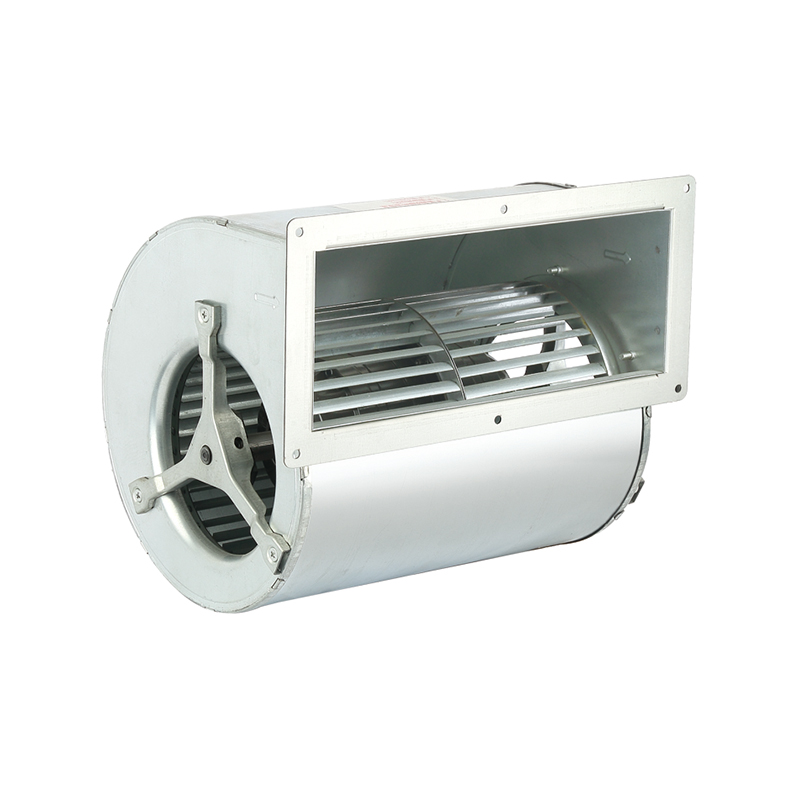
The DKT-133 Cooling Ventilation Double Inlet Air Conditioning Fan is d...
See Details
The DKT-146 Multi-Function Variable Frequency Double Inlet Air Conditi...
See Details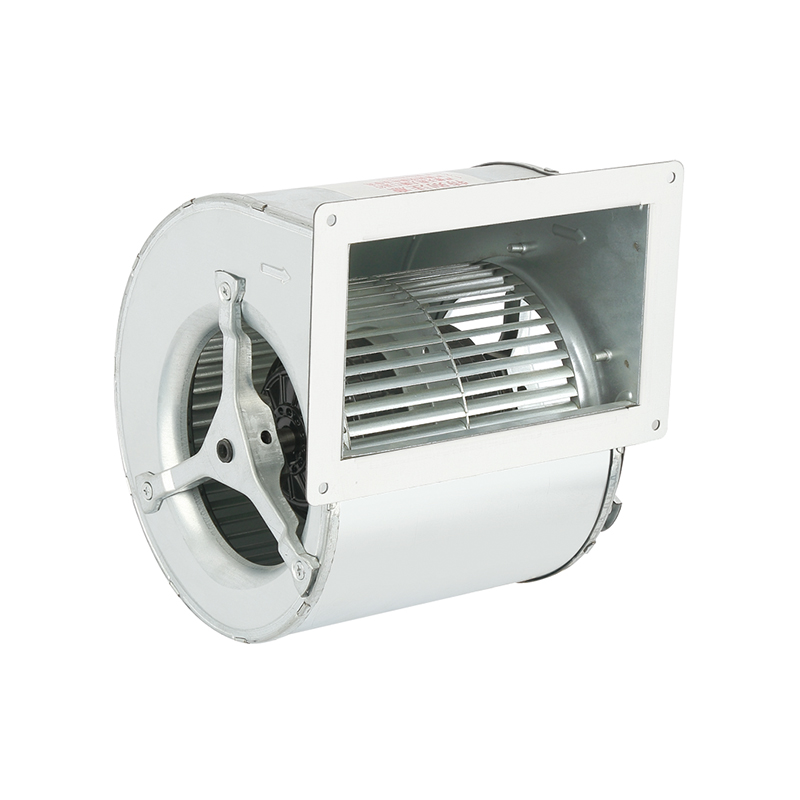
The DKT-160 Heat Dissipation Exhaust Double Inlet Air Conditioning Fan...
See Details
The DKT-180 Tilt Back Cool Down Double Inlet Air Conditioning Fan, a s...
See Details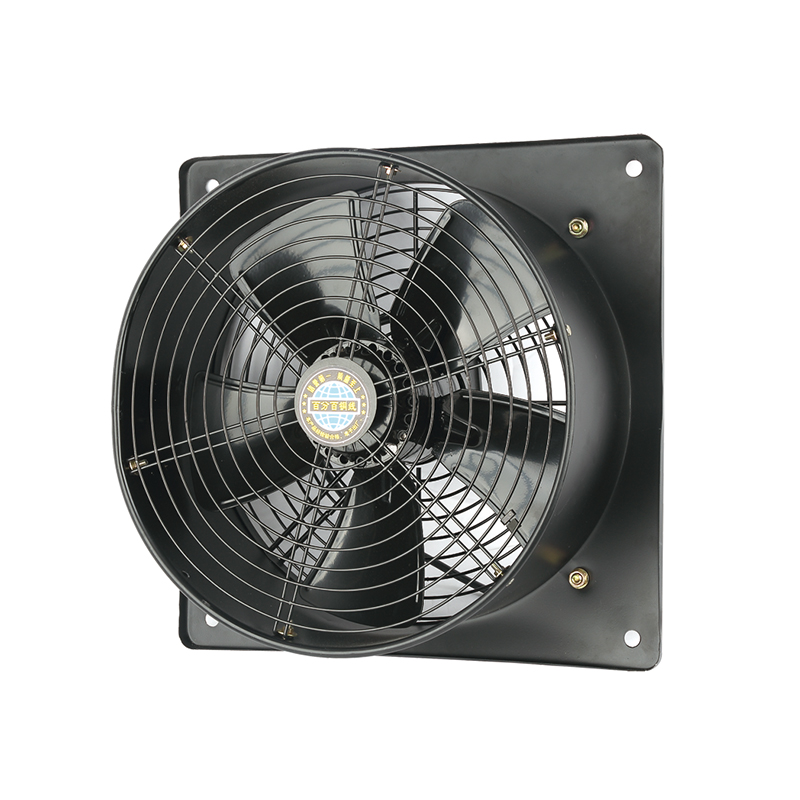
The YWF-400-2D2E Efficient Square form Axial fan is designed with a fo...
See Details
The YWF-350-2D2E Low noise Square form Axial Fan is designed with a co...
See Details
The YWF-350-4D4E Low vibration Square form Axial Fan is a outstanding ...
See Details
The YWF-400-4D4E Durable Square form Axial Fan is designed with advanc...
See Details
Qinlang focuses on providing high-quality products and considerate services, and is committed to meeting every expectation of our customers.
© Zhejiang Qinlang Electromechanical Co., Ltd.
Fans And Air-Cooling Equipment Factory
