 English
 русский
 عربى
عربى Español
Qinlang focuses on providing high-quality products and considerate services, and is committed to meeting every expectation of our customers.
The DKT-133 Cooling Ventilation Double Inlet Air Conditioning Fan is d...
See Details
Industrial cooling in real applications is rarely a single-action process. It is usually connected with how air moves through space, how heat spreads from equipment, and how the overall layout supports circulation. In many facilities, the challenge is not only temperature itself, but the way air becomes trapped or uneven during continuous operation.
An AC axial flow fan is commonly used in this type of environment to support steady air movement. The function is straightforward: maintain directional airflow so that heat does not remain concentrated in limited areas for extended periods.
When airflow becomes part of daily operation conditions
In many industrial sites, airflow issues are not noticed immediately. The space may feel normal at first, even when machines are already generating continuous heat. Over time, however, the air inside begins to feel less active.
This usually appears as a gradual change rather than a sudden problem. Areas close to equipment may feel warmer, while corners or upper zones may hold stagnant air. The overall environment starts to lose balance in movement.
At this stage, airflow is no longer just a comfort factor. It becomes part of operational stability.
Directional airflow in structured environments
Industrial spaces are rarely open and simple. Most of the equipment consists of machinery, partitions, storage areas, and movement paths. Of course, these physical factors affect the way the air travels.
Because of this, air flow is usually shaped more by direction than by volume. If air movement lacks a clear path, it can disperse into irregular circulation loops, reducing its ability to refresh the entire space.
Axial flow configuration is often applied in layouts where air can move in a relatively straight direction. This makes it suitable for corridors, production lines, and duct-based ventilation routes.
Typical environments where airflow support is applied
Instead of separating by industry type, it is more practical to look at operational conditions.
In continuous production environments, heat is generated steadily during operation cycles. Air movement helps reduce localized buildup around active equipment and supports more even distribution across working areas.
In electrical or control spaces, airflow is generally used to prevent heat accumulation near sensitive components. The goal is to keep surrounding air from staying in a concentrated warm state.
In a storage environment, particularly in a larger space, the air may remain stationary in the top or corner sections. In the absence of movement, the difference in temperature between zones becomes more noticeable over time.
In mixed-use workshops, the heat is distributed between the machinery and the human activity. This creates changing air flow conditions that benefit from continuous circulation support.
How installation conditions affect actual performance
In practice, the air flow behavior is not determined solely by the device. Installation conditions often have a significant effect on the movement of air within the space.
Several factors commonly affect performance:
Even when equipment operates consistently, these factors can change how airflow is experienced in different areas of the same facility.
Maintenance as part of long-term stability
Industrial environments introduce continuous exposure to dust, particles, and operating vibration. Over time, these conditions gradually influence airflow pathways.
Common long-term changes may include:
Maintenance usually focuses on keeping the air flow path open and steady, instead of adjusting the behavior of the system. Regular inspection helps reduce gradual performance variation during long operation cycles.
System thinking in ventilation design
Airflow equipment is typically part of a broader ventilation structure rather than a standalone element. In most systems, air follows a continuous path: entering the space, moving through different zones, interacting with heat sources, and exiting through planned outlets.
Each stage of this process affects the next. If intake is limited, circulation becomes limited. If the discharge is blocked, the air can re-circulate internally rather than effectively leaving the system.
Because of this, axial flow units are usually selected and placed based on overall system layout instead of isolated installation decisions.
Influence of environmental conditions
External and internal conditions both play a role in airflow behavior. Temperature variation, humidity levels, and building structure can all influence how air moves inside enclosed spaces.
For example, enclosed buildings with higher insulation may retain airflow differently compared to more open structures. Seasonal changes can also slightly affect air density and movement behavior.
These variations are usually gradual, but they contribute to long-term airflow characteristics.
Operational role of AC axial flow systems
In industrial ventilation setups, AC axial flow fans are mainly used to support directional movement of air. Their role is related to maintaining circulation continuity rather than directly controlling thermal conditions.
When integrated into a properly designed system, they help reduce stagnant zones, support air exchange between different areas, and improve overall airflow consistency within the space.
Their performance is closely connected to system design, installation quality, and environmental conditions rather than isolated equipment behavior.
Long-term operational behavior
Over a prolonged period of time, the air flow system may experience a gradual change in behaviour. These changes are often slow and are associated with exposure to the environment, not sudden failure.
Typically, there are subtle changes in the air flow distribution or in the consistency of the circulation between the various areas of the facility.
Routine inspections and basic cleaning help to maintain stability by maintaining a clean and structured flow path.
Practical Perspective in Industrial Cooling Design
Industrial cooling, from an engineering point of view, is more about keeping the air moving, rather than forcing it to change the temperature. AC axial flow fans are one part of this broader system.
Their value is to support continuous air flow, help reduce stagnation, and maintain a more even distribution of air in an industrial environment.
Combined with proper system layout and installation planning, they help to create a stable air flow structure that supports long term operation in a broad range of industrial applications.
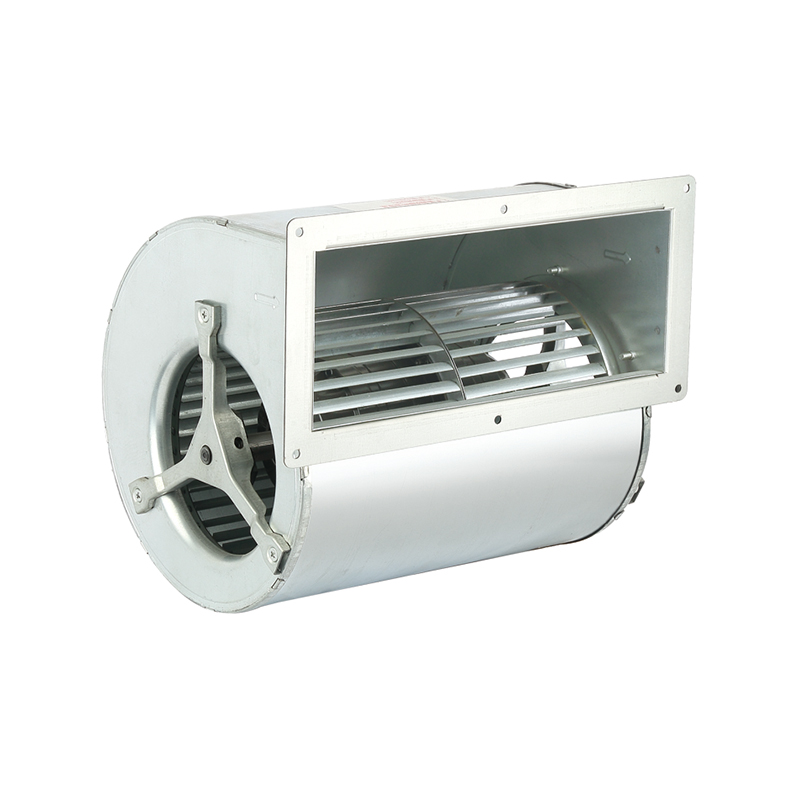
The DKT-133 Cooling Ventilation Double Inlet Air Conditioning Fan is d...
See Details
The DKT-146 Multi-Function Variable Frequency Double Inlet Air Conditi...
See Details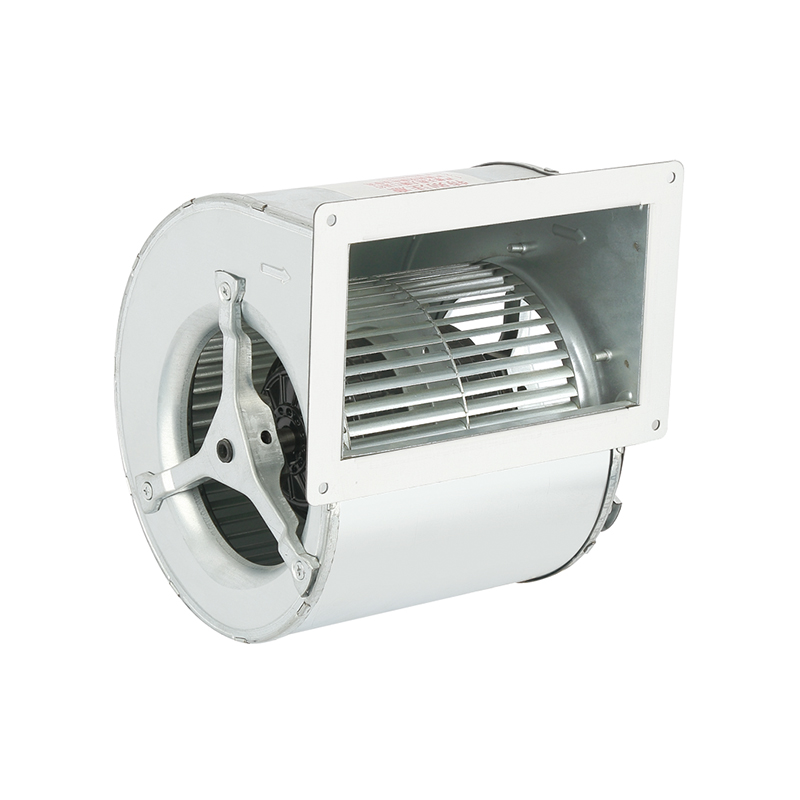
The DKT-160 Heat Dissipation Exhaust Double Inlet Air Conditioning Fan...
See Details
The DKT-180 Tilt Back Cool Down Double Inlet Air Conditioning Fan, a s...
See Details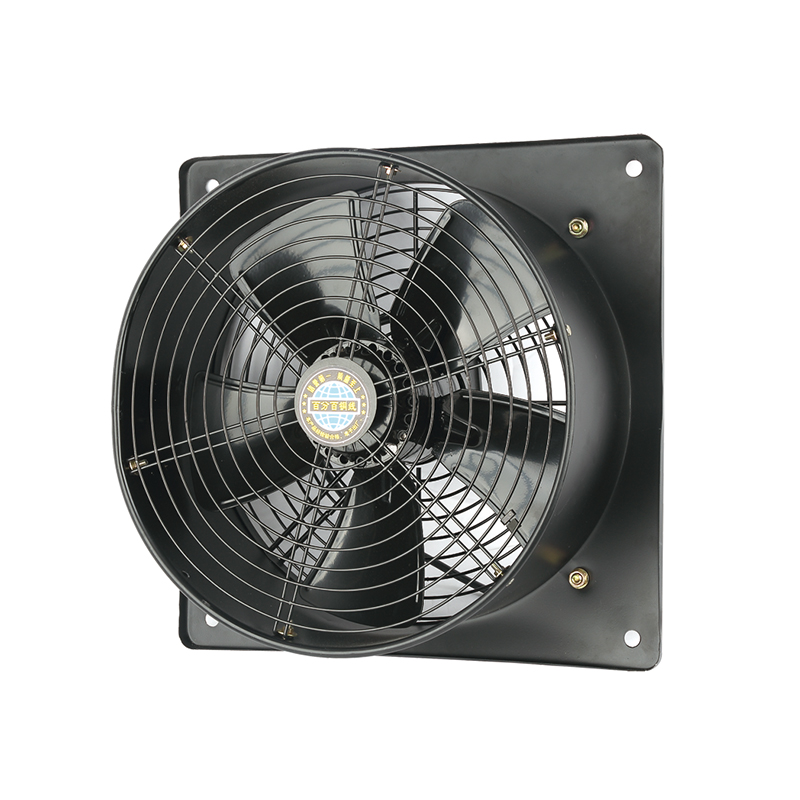
The YWF-400-2D2E Efficient Square form Axial fan is designed with a fo...
See Details
The YWF-350-2D2E Low noise Square form Axial Fan is designed with a co...
See Details
The YWF-350-4D4E Low vibration Square form Axial Fan is a outstanding ...
See Details
The YWF-400-4D4E Durable Square form Axial Fan is designed with advanc...
See Details
Qinlang focuses on providing high-quality products and considerate services, and is committed to meeting every expectation of our customers.
© Zhejiang Qinlang Electromechanical Co., Ltd.
Fans And Air-Cooling Equipment Factory
