 English
 русский
 عربى
عربى Español
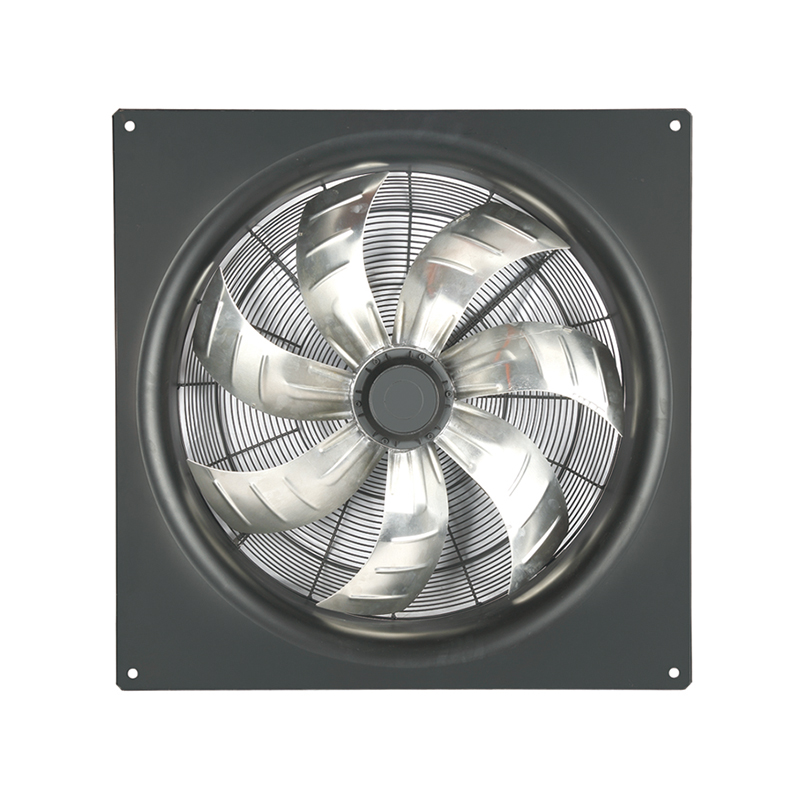
The YWF-800 Large Air Volume Reverse Mounted Square Form Axial Fan is designed to deliver special ai...

Square Axial Fan
-
-
YWF-910 Grille Reverse Mounted Square Form Axial Fan
The YWF-910 Grille Reverse Mounted Square Form Axial Fan is an efficient and versatile cooling solut...
Square axial fans combine efficiency, durability, and design flexibility, making them an excellent choice for a wide range of applications. Their ability to fit in tight spaces, provide powerful airflow, and save on energy costs makes them a go-to solution for industries ranging from manufacturing to HVAC systems. Whether you need customized airflow, quiet operation, or reliable performance, square axial fans provide the ideal balance of functionality and cost-effectiveness. With increasing demands for energy-efficient, sustainable systems, square axial fans are becoming a preferred choice for businesses seeking both high performance and long-term savings.
Certificate
After years of unremitting efforts, Qinlang's R&D team has achieved a number of technological achievements in the field of axial flow fan manufacturing, ensuring the integrity of the company's technical processes and the diversity of its products, and forming a deep technical reserve.
ABOUT US
Zhejiang Qinlang Electromechanical Co., Ltd.
Zhejiang Qinlang Electromechanical Co., Ltd. was established in 2012. It is a fan company specializing in the design, development, production and marketing of various fans and air-cooling equipment for industrial manufacturing and industrial construction. The main products are external rotor fans and hooded motor fans.
As a Square Axial Fan Factory and Square Axial Fan, our products are widely used in cooling and ventilation of various refrigeration, air conditioning, instruments, or for ventilation or purification of buildings, kitchens, industrial and mining enterprises, etc.
The company has won public praise for its leading technology and efficient management, and ranks among the best in the fan industry. Provide customers with high-quality products and good services. Based on the business philosophy of "people-oriented and forge ahead", the company relies on strong information resources and rich industry experience to minimize the procurement costs for customers and create the greatest benefits for customers.
As a Square Axial Fan Factory and Square Axial Fan, our products are widely used in cooling and ventilation of various refrigeration, air conditioning, instruments, or for ventilation or purification of buildings, kitchens, industrial and mining enterprises, etc.
The company has won public praise for its leading technology and efficient management, and ranks among the best in the fan industry. Provide customers with high-quality products and good services. Based on the business philosophy of "people-oriented and forge ahead", the company relies on strong information resources and rich industry experience to minimize the procurement costs for customers and create the greatest benefits for customers.
Message Feedback
Recent News
Learn about our industry exhibition information and recent events in our company.
-
What is Square Axial Fan Square axial fan is a kind of mechanical device designed to move air or gas...
26 -
Understanding Duct Silent Fan A duct silent fan is a device that moves air through ventilation syste...
22 -
Key Features to Look For When you are looking for a duct silent fan, there are several aspects that ...
19 -
What Is a Duct Silent Fan A duct silent fan is a type of ventilation device designed to move air thr...
15
How Square Axial Fans Contribute to Efficient Heat Dissipation in Electronics Cooling Systems
A square axial fan is a type of fan designed to move air in a straight line along the axis of rotation, with its blades positioned in a square-shaped housing. These fans are engineered to provide high airflow with relatively low power consumption, making them highly efficient for cooling and ventilation systems. The square design allows for more compact installations, especially in environments with limited space, such as electronics cooling systems.
Square axial fans work by drawing air into the fan's intake, which is then pushed out through the exhaust. The air moves in a straight line, parallel to the fan's axis. These fans are commonly used in both industrial and commercial applications, including HVAC systems, automotive cooling, and electronic equipment cooling.
The Role of Square Axial Fans in Electronics Cooling
Square axial fans are now a go-to choice for keeping modern electronics cool. As devices pack more power into smaller, energy-efficient packages, managing heat has become absolutely vital. Too much heat slows performance, damages parts, or kills systems entirely. Square axial fans solve this problem with a small, powerful, and highly effective design.
How Square Axial Fans Differ from Other Cooling Fans
Centrifugal fans push air sideways at a 90-degree turn, while square axial fans drive air straight forward along the shaft. That straight-through flow moves far more air with less resistance, making them perfect when the goal is to flood a tight space with cooling air fast—exactly what most electronics need.
Centrifugal fans excel at pushing air against high pressure but are bigger and more complicated. Square axial fans give you higher airflow in a much smaller, simpler package, which is why they dominate in space-constrained gear like PCs, servers, telecom racks, and data centers.
Why They Shine in Electronic Cooling
Their neat square shape slips easily into cramped cases and enclosures without wasting space. You’ll find them keeping laptops, desktops, server blades, LED fixtures, and high-density electronics running cool even when room is extremely tight.
Thanks to strong, direct airflow, they rapidly sweep heat away from CPUs, GPUs, power supplies, and other hot components. This keeps temperatures low and steady, stops performance throttling, maintains full speed, and greatly extends the life of the equipment.
Aerodynamic Efficiency: How Square Axial Fans Enhance Airflow for Better Heat Dissipation
Square axial fans dominate electronics cooling largely because of their superior aerodynamic efficiency. Smart blade and housing design directly translates into stronger airflow, lower power draw, and faster heat removal.
- Precision Blade Design for Maximum Flow with Minimal Effort
- Today's square axial fan blades are sculpted to deliver huge volumes of air while barely fighting the airflow itself. Deeply curved, aerodynamically honed profiles slice through the air with almost no drag or swirl. This lets the fan produce powerful, smooth streams of cooling air using far less electricity than older flat-blade designs—an ideal trait for compact, heat-packed electronics.
- The Role of Blade Angle, Shape, and Material in Real-World Efficiency
- Blade pitch sets the volume: steeper angles move more air, but only up to the point where drag starts to climb. Engineers find the perfect balance for each application. Swept-back or sickle-shaped blades further cut resistance and noise. Choosing lightweight, heat-resistant materials—advanced plastics or composites—keeps the rotor light for quick spin-up and long life, even when running hot inside cramped server cases or LED fixtures.
- Why Killing Turbulence is the Key to Superior Heat Removal
- Chaotic, swirling air carries heat away unevenly and wastes energy. Square axial fans are built to prevent that. Contoured blades, smooth inlet bells, and integrated straighteners or diffusers turn wild flow into a calm, directed river of air. The result: heat is stripped quickly and uniformly from chips, voltage regulators, and graphics cards, keeping temperatures low, stable, and far from thermal limits.
Customization for Electronics Cooling: Tailoring Square Axial Fans to Specific Needs
In electronics cooling, no single fan fits every application. As modern devices pack more power into smaller spaces, generic solutions fall short. Square axial fans stand out because they can be fully adapted to deliver exactly the right amount of airflow and pressure for any specific system. Customization is what turns a good fan into the perfect thermal solution.
- Why Customization Is Essential for Different Electronic Devices
- No two products generate or distribute heat the same way. A gaming PC, a rack-mounted server, a telecom enclosure, or a household appliance each has its own hotspots, airflow restrictions, and noise limits. Custom square axial fans allow engineers to adjust size, blade shape, and motor characteristics so that cooling is matched precisely to the actual heat load of critical components like processors, graphics cards, and voltage regulators. The result is lower temperatures, higher reliability, and better overall performance without over-cooling or wasting energy.
- Adjustable Speed, Blade Geometry, and Frame Size for Perfect Airflow Control
- Engineers can vary rotational speed, tweak blade angle and curvature, and choose from a wide range of frame dimensions. These options make it possible to produce anything from low-noise, low-pressure flow for compact consumer devices to high-static-pressure, high-volume cooling for densely packed server blades, all while keeping acoustic levels and power draw under control.
- Choosing the Right Motor Strength and Materials for Durability and Performance
- The motor and material selection determine how well the fan holds up under real-world conditions. High-performance applications need motors with enough torque to sustain strong airflow over long periods. Using tough, temperature-resistant plastics or lightweight metal alloys for the frame and impeller increases resistance to heat, dust, and vibration, ensuring the fan continues to deliver reliable, efficient cooling for the entire life of the device.
Noise Reduction Technologies in Square Axial Fans for Quiet Operation in Electronics
In modern electronics, fan noise has become a critical issue, especially in products people use at home or in quiet offices. Consumers now expect high performance without the constant drone of cooling fans. Square axial fans, once mainly chosen for raw airflow, have evolved with sophisticated quieting features that keep them powerful yet remarkably silent.
- Why Silence Has Become Non-Negotiable in Consumer Devices
- A loud fan can ruin a gaming session, disturb a movie, or simply annoy someone working from home. In laptops, gaming PCs, soundbars, refrigerators, or even high-end workstations, intrusive noise instantly lowers the perceived quality of a product. Users want components to stay cool under heavy load while the system itself remains whisper-quiet. Today’s square axial fans meet that demand: they move the necessary air without turning the device into a noise source.
- Engineering Advances That Deliver Near-Silent Operation
- Several targeted improvements work together to cut noise dramatically:
- Blade profiles are now sculpted to produce smoother, less turbulent airflow, eliminating most of the traditional "whooshing" sound.
- Precision brushless DC motors run with almost no mechanical hum or bearing noise.
- Soft rubber mounting points and isolated housings prevent vibration from traveling into the chassis or cabinet.
- The combined effect is a fan that can operate at full cooling capacity yet produce only a fraction of the noise of earlier designs.
- Several targeted improvements work together to cut noise dramatically:
- Tangible Improvements Users Notice Every Day
- Gamers can run their rigs at maximum boost without drowning out headsets. Living-room PCs and streaming boxes stay cooler than ever while blending into the background. Modern kitchen appliances and air purifiers run so quietly that people often forget they're on. In professional studios and offices, workstations remain calm enough for focused work or clear audio recording. Across all these applications, quieter square axial fans remove a major irritation without forcing any sacrifice in thermal performance or reliability.
Thermal Management Integration: Square Axial Fans in Modern Electronics Systems
- How Square Axial Fans Fit into Complete Cooling Architectures
- These fans don't operate in isolation. They team up with heat sinks, heat pipes, vapor chambers, and liquid loops to move heat away from chips as fast as it's generated. Hot air is forced across finned surfaces or pulled through narrow gaps between cards so that every watt is carried out of the chassis efficiently. In crowded server blades or slim gaming laptops, the fans are positioned and tuned to deliver airflow exactly where hotspots form, eliminating thermal bottlenecks without wasting a single CFM.
- Smart Sensors and Controllers That React in Real Time
- Fixed-speed fans are obsolete. Tiny temperature sensors embedded near processors, memory, and power stages feed data to intelligent controllers multiple times per second. The moment a GPU jumps under load, fan curves instantly ramp speed; the moment the workload eases, they drop back down. This on-demand behavior keeps components at their ideal temperature, slashes electricity waste, quiets the system during normal use, and extends the life of the fans themselves.
- Proven Examples from Real Products
- Thin gaming laptops now pack dual or triple square axial fans alongside multi-heat-pipe layouts and large vapor chambers, letting them run the latest CPUs and GPUs at full boost for hours without overheating or loud noise spikes. Enterprise and cloud servers combine rows of these fans with direct-liquid or immersion cooling to pull tens of kilowatts of heat from 1U and 2U chassis while staying within strict thermal limits. Compact mini-PCs and edge networking boxes use the same fans with smart PWM control to deliver workstation performance in near-silent, living-room-friendly packages. Across all these designs, square axial fans consistently prove they're flexible, powerful, and cost-effective—the go-to choice for modern thermal engineering.
Material Science Innovations in Square Axial Fans for Electronics Cooling
Material breakthroughs have completely changed what square axial fans are capable of. Stronger, smarter, and more heat-tolerant compounds now deliver longer life, higher speeds, and better cooling efficiency in the same compact footprint.
- Modern Materials That Redefine Fan Construction
- Current-generation square axial fans use high-tech thermally conductive plastics, glass- or carbon-fiber-reinforced resins, and precision-cast aluminum or magnesium alloys. These choices move heat away from the motor and hub far more effectively while cutting rotating mass dramatically—sometimes by 30–40 % compared to older designs.
- Superior Resistance to Heat and Wear
- These new materials laugh at the kind of temperatures that used to destroy fans. Specially formulated polymers and metal alloys stay dimensionally stable at sustained 90–110 °C airflow temperatures and survive thousands of extreme thermal cycles without warping, cracking, or brittleness. Blades hold their exact pitch, frames stay square, and bearings remain perfectly aligned for the full service life—often a decade or more in 24/7 server rooms and telecom cabinets.
- Clear Benefits in Efficiency, Endurance, and Raw Cooling Performance
- Lower weight means the motor needs less current to hit and hold high RPM, so the same fan now draws noticeably less power while pushing more air and pressure. Faster heat removal from the motor itself keeps bearings cooler and multiplies lifespan. The net result: engineers get stronger cooling from smaller, lighter fans that run quieter, sip less electricity, and simply refuse to fail—even when the rest of the system is pushed to its limits. For any high-reliability or high-density application, that combination is hard to beat.
Square axial fans are now essential for keeping today's high-performance electronics cool. Continuous improvements in customization, ultra-quiet operation, intelligent thermal integration, and advanced materials have made them far more capable of meeting the extreme demands of compact, power-dense designs across every industry.
At Zhejiang Qinlang Electromechanical Co., Ltd., we stay ahead of those demands. We constantly refine and innovate, delivering fans that move more air with less noise, last longer under harsh conditions, and integrate perfectly into the most sophisticated cooling systems. As devices keep getting smaller and more powerful, our square axial fans will continue to provide the proven reliability, efficiency, and silence that modern electronics require.

Qinlang focuses on providing high-quality products and considerate services, and is committed to meeting every expectation of our customers.
© Zhejiang Qinlang Electromechanical Co., Ltd.
Square Axial Fan Manufacturers
